





In my previous articles, I reflected on the shift from academia to real-world data projects, and why cloud literacy has become foundational in modern Data and AI careers.
But there’s another layer of modern data work that deserves more attention:
Testing, validation, and the engineering of trust.
Working on real systems changed how I understand data testing — not as a final step, but as a core architectural responsibility.

From Evaluation to System Validation
In academic settings, testing usually means evaluating outputs:
- Does the model perform well?
- Are the metrics acceptable?
- Is the result statistically sound?
The environment is stable.
The dataset is fixed.
The scope is controlled.
In real systems, testing expands far beyond model performance.
It includes:
- Validating data consistency across environments
- Ensuring transformation logic behaves as expected
- Confirming business rules are implemented correctly
- Protecting downstream analytics from silent errors
Testing becomes systemic.
The Role of Cloud Platforms in Structured Testing
Modern cloud platforms like Microsoft Azure and Microsoft Fabric make large-scale data systems possible but they also introduce architectural complexity.
Fabric, in particular, unifies data engineering, transformation, storage, and analytics within a single ecosystem. This integration increases efficiency, but it also increases the importance of validation at multiple layers.

In structured environments, proper data testing typically involves:
- Clear separation between development, testing, and production environments
- Defined test strategies before deployment
- Validation of ETL logic before data is exposed to reporting layers
- Regression testing when logic changes
- Monitoring to detect anomalies post-deployment
The flexibility of cloud-native platforms makes it easier to implement such strategies. Version control, modular pipelines, scalable compute, and centralized governance allow teams to validate and promote changes more safely.
But technology alone does not guarantee quality.
Process does.
Test Strategy Is Architecture
One of the key realizations for me was that testing is not just about checking outputs; it is part of system design.
A proper test strategy answers questions like:
- What are the acceptance criteria?
- How do we validate transformations?
- How do we ensure parity during migrations?
- What edge cases must be considered?
- How do we confirm semantic consistency?
Without a strategy, testing becomes reactive.
With a strategy, testing becomes preventative.
That difference defines the maturity of a data system.
Semantic Models: The Trust Layer
Testing does not stop at pipelines.
The semantic layer, where relationships, measures, and aggregations are defined, is where business meaning is encoded.
Even perfectly migrated raw data can produce misleading insights if:
- Measures are miscalculated
- Relationships are incorrectly defined
- Filters behave unexpectedly
- Aggregations do not align with business logic

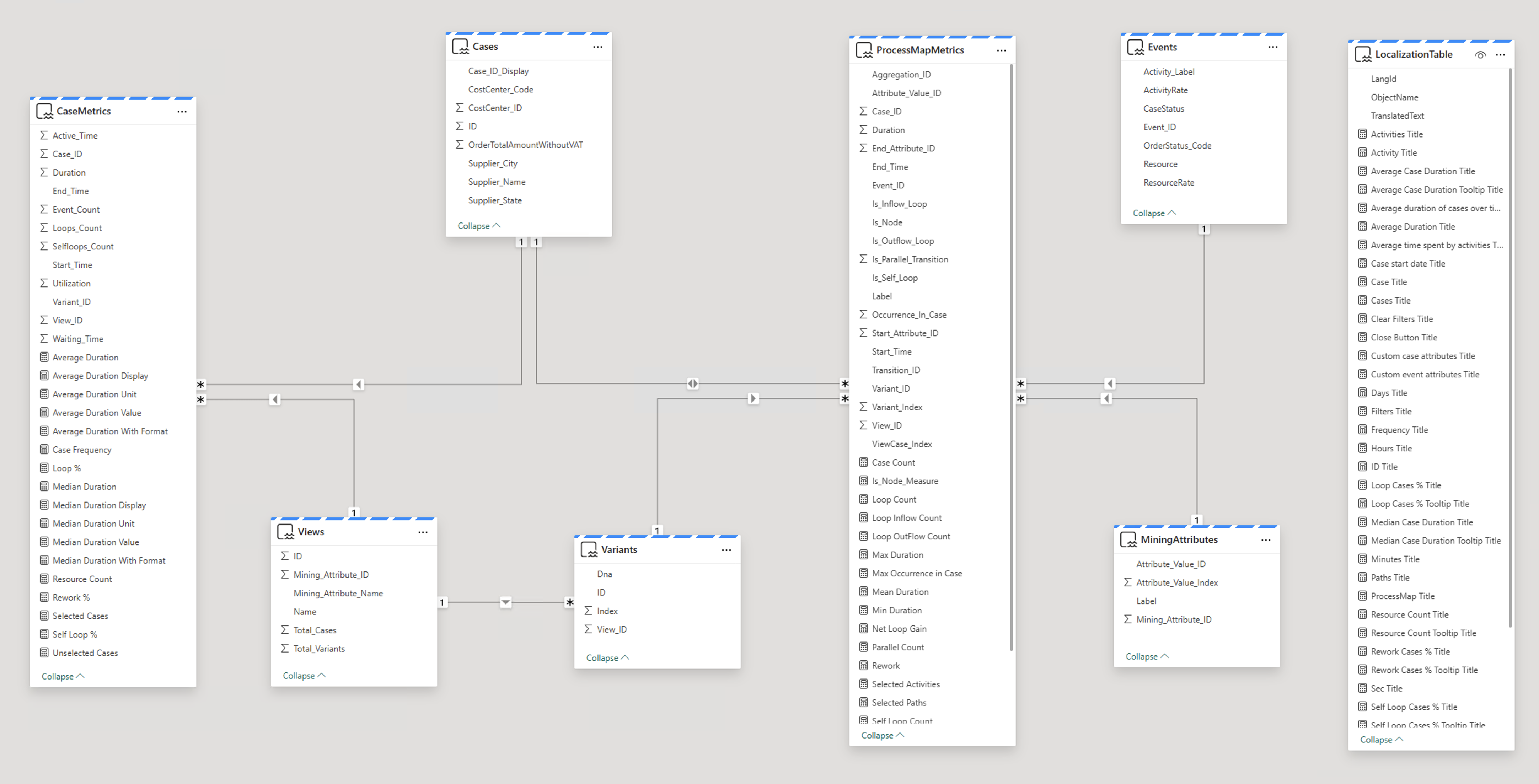
Platforms like Microsoft Fabric simplify the integration between data engineering and analytics layers. But that integration also means errors can propagate quickly if validation is weak.
Testing at this level is not purely technical; it requires understanding business context.
And that is where data work becomes truly interdisciplinary.
Reliability Over Elegance
In university, complexity can be impressive.
In real systems, reliability is impressive.
Clean architectures.
Well-defined validation layers.
Clear deployment pathways.
Controlled promotion of changes.
These may not be as visible as a high-performing machine learning model, but they are what sustain long-term trust.
Understanding the Data Stack: What I Use and Why It Matters – Yes Techies AI
[…] my previous articles, I explored different layers of modern data work, from cloud platforms and pipelines to testing, […]
Why Most Data Problems Are Pipeline Problems – Yes Techies AI
[…] a previous article, I wrote about the importance of testing in modern data systems and how validation helps build […]